
Water Stain on Ceiling?How to Tell if It's a Roof Leak, Plumbing Leak, or HVAC Problem
The stain shows where moisture became visible, not where it started. Use timing, what sits above the ceiling, and moisture patterns to narrow the source down to roofing, plumbing, or HVAC before anyone opens or paints anything.
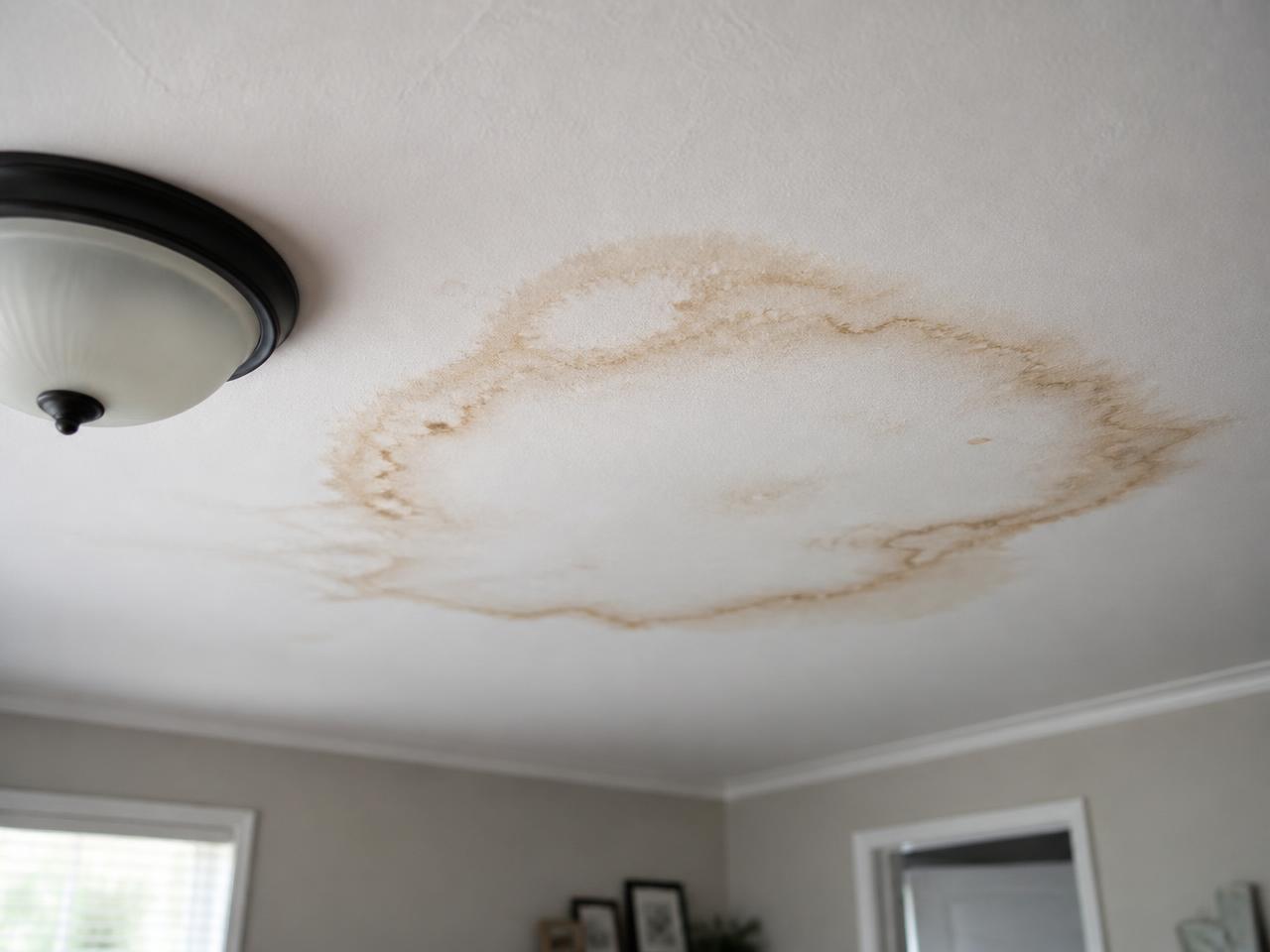
The stain shows where water became visible — not where it started
A water stain on the ceiling means moisture has reached the drywall or ceiling material, but the stain does not tell you where the water started.
The three paths worth investigating are:
- Roof or exterior water intrusion
- Plumbing above the ceiling
- HVAC condensation or drainage
A stain that appears after rain points more strongly toward a roof or exterior leak. A stain below a bathroom, kitchen, laundry room, or plumbing fixture may point toward plumbing. A stain near an attic air handler, condensate line, or ductwork may be related to condensation or drainage.
Water travels. It runs along pipes, framing, roof decking, and ducts before it becomes visible, so the stain may be several feet from the actual source. The goal is not to cover the stain. The goal is to find and stop the moisture source first.
Is the ceiling leak an emergency?
Most ceiling stains are a problem to investigate carefully, not a crisis. A few situations deserve a faster response.
Water is actively dripping, the ceiling is bulging or sagging, drywall feels unusually soft, a large area is quickly becoming wet, or a significant plumbing leak is running above the ceiling.
Water appears during storms, the stain grows each time it rains, or the stain darkens after a specific fixture is used. Start documenting and plan an inspection.
A single stable stain with no dripping, no sagging, and no recent change. Note what is above it and watch for change after rain or fixture use.
- If water is near or entering a light fixture, ceiling fan, outlet, wiring, or any electrical equipment, keep clear of the area and contact a qualified electrician or your utility as appropriate.
- Do not touch wet electrical fixtures, remove electrical covers, or open an electrical panel.
- If the ceiling is significantly bulging or saturated, stay out of the area underneath it — wet drywall is heavy and can fail without warning.
- Do not puncture a bulging ceiling to drain it. Wiring, plumbing, and structural conditions are hidden above that surface.
- Move furniture and belongings out of the area if you can do so safely, and place a container to catch active dripping only where it is safe to stand.
Where is the water coming from?
Use timing and location first. These four patterns cover most ceiling stains, and each one points your investigation in a different direction.
Possible direction: Roof / exterior water intrusion
- Roof penetrations, vents, and pipe boots
- Flashing, valleys, and chimney flashing
- Skylights and skylight curbs
- Damaged, lifted, or missing roofing components
- Siding and wall intersections above the area
- Windows located above the stain
- Wind-driven rain from one direction
The stain does not identify the exact roof penetration. Water can travel along decking, framing, and insulation before it reaches the ceiling.
Possible direction: Plumbing
- Supply-line leaks under pressure
- Drain leaks that only run when used
- Toilet connections and floor flanges
- Shower or tub plumbing and failed seals
- Dishwasher or washing-machine supply lines
- Plumbing penetrations through the floor
Ask a simple question: does the area become wetter after someone showers, flushes a toilet, uses a sink, runs the dishwasher, or runs the washing machine?
Possible direction: HVAC / condensation
- Clogged condensate drain line
- Overflowing or rusted drain pan
- Damaged or disconnected drain line
- Condensate pump that has stopped working
- Moisture at or around the air handler
- Condensation on ductwork
- Missing or compressed insulation
HVAC-related ceiling moisture often shows up in cooling weather rather than during rain.
Possible direction: Hidden or intermittent moisture
- Compare moisture across the affected area
- Inspect above the ceiling where it is safely accessible
- Write down when the stain grows or darkens
- Note the weather and which fixtures were running
- Consider professional investigation
Intermittent moisture is the hardest kind to catch. Documentation over several days is often more useful than a single inspection.
Helpful tool: check whether the area is still holding moisture
If a ceiling stain is dry to the touch, that does not necessarily tell you whether moisture remains within the material.
A pinless moisture meter can help compare relative moisture levels across drywall and surrounding building materials without immediately making holes in the ceiling.
The Klein Tools ET140 is one option to consider. It is designed to detect relative moisture non-destructively in compatible materials, including drywall. A useful approach is to compare the affected area with nearby material that appears dry. Mapping the relative readings may help you understand the extent of the moisture pattern and whether conditions appear to be changing.

Klein Tools ET140 Pinless Moisture Meter
Compares relative moisture in drywall and other compatible materials without making holes first.
Why here: Helpful when a ceiling stain looks dry but you still need to know whether the area is holding moisture, and whether that pattern is spreading or shrinking.
A moisture meter does not tell you what caused the moisture. An elevated reading could be associated with roof intrusion, plumbing, HVAC condensation, or another moisture source. Use it as one piece of the investigation — not as the final diagnosis.
Affiliate disclosure: Sentinel Home may earn a commission from qualifying purchases at no additional cost to you. Affiliate relationships do not determine Sentinel recommendations or product rankings.
How to use a moisture meter responsibly
- Start with an area right next to the stain.
- Compare that reading with nearby material that appears unaffected.
- Move across the ceiling systematically rather than sampling at random.
- Look for relative differences and patterns instead of treating one number as proof.
- Write down the readings and where you took them, with the date.
- Recheck later — the same locations, a few days apart — if you suspect an intermittent leak.
Building materials, objects behind the drywall, construction differences, and other conditions can affect readings. One number does not prove that a hidden leak exists, and it does not prove that one does not. Do not use the meter on or near live electrical circuits or wet electrical equipment.
Signs the water may be coming from the roof
What you're seeingA stain that appears, darkens, or spreads in connection with weather.
- Water entering at a roof penetration
- Failed or lifted flashing
- Wind-driven rain entering a wall or roof intersection
- Damaged or missing roofing components
- Water tracking along decking before it drips
- 1Note whether the stain appears during or after rain, and whether it worsens with wind-driven rain from one direction.
- 2Where the attic is safely accessible, look for moisture, staining, or wet roof decking above the area — from a stable, well-lit vantage point.
- 3Look for staining near plumbing vents, bath fans, chimneys, skylights, and valleys.
- 4From the ground, look for visibly damaged or missing roofing components and clogged or overflowing gutters.
- The roof is wet, steep, damaged, snow-covered, or otherwise unsafe — do not climb it.
- Water is entering during storms and you cannot identify where.
- Attic access is unsafe, or insulation and decking are saturated.
Roof sealant is not a universal repair. Sealing the wrong spot can hide the real entry point and delay a proper fix.
Sentinel's contractor experience is in early access. Until it opens, this routes to Sentinel's related guidance and solutions.
Signs the water may be plumbing related
What you're seeingA stain below a bathroom, kitchen, laundry area, or plumbing fixture that changes with water use.
- A supply-line leak under constant pressure
- A drain leak that only runs when a fixture is used
- A toilet connection or wax-ring failure
- Tub or shower plumbing and failed seals
- An appliance supply line or drain hose
- 1Identify exactly what is directly above the stain, one floor up.
- 2Run one fixture at a time — sink, shower, tub, toilet, dishwasher, washing machine — and watch the ceiling for change.
- 3Check the floor around fixtures above for softness, discoloration, or caulk failure.
- 4Look inside accessible cabinets above for staining or active drips.
- Water runs continuously, which suggests a pressurized supply leak.
- The plumbing is concealed and cannot be inspected without opening finished surfaces.
- You cannot connect the moisture to any fixture after testing.
Continuous versus intermittent
A supply-line leak is under pressure all the time, so it usually produces steady, growing moisture. A drain or fixture leak only carries water while that fixture is being used, so it often appears, dries, and returns. That difference is one of the most useful clues you can collect.
If the source turns out to be your water heater rather than a fixture, Sentinel's guide on a water heater leaking from the bottom walks through those causes.
Sentinel's contractor experience is in early access. Until it opens, this routes to Sentinel's related guidance and solutions.
Signs the water may be coming from your HVAC system
What you're seeingCeiling moisture near an attic air handler, ductwork, or condensate line — often in cooling weather rather than during rain.
- A clogged condensate drain line
- An overflowing or corroded drain pan
- A damaged or disconnected drain line
- A condensate pump that has stopped working
- Condensation forming on ducts
- Missing or compressed duct insulation
- 1Note whether the stain appears when the air conditioner runs, and whether it dries when the system is off.
- 2Where safely accessible, look at the drain pan under the air handler for standing water.
- 3Follow the condensate line to its exit point and confirm water is draining outside.
- 4Look for damp insulation or beads of moisture on ductwork above the stained area.
- Standing water sits in the pan or the system shuts off on a safety switch.
- Reaching the equipment requires unsafe attic access.
- Electrical components near the air handler have been exposed to water.
Two Sentinel guides go deeper on this path: Why Is My Air Conditioner Leaking Water? and AC Condensate Drain Clogged?
Don't paint over the stain until you fix the cause
Stain-blocking primer, ceiling paint, drywall patching, and cosmetic repair all belong at the end of this process — not the beginning. In general, cosmetic work should come after:
- The moisture source has been identified
- The leak has been repaired
- The affected material has been evaluated
- The area has been appropriately dried
- Damaged material has been addressed where necessary
Painting first removes the one indicator you have. If the leak returns, you lose the ability to see how far it spread and how quickly it came back.
When to stop troubleshooting and call a professional
- An active leak cannot be isolated
- The ceiling is sagging or bulging
- Water is near electrical fixtures, wiring, or equipment
- Roof access would be unsafe
- Moisture keeps returning after a repair
- The plumbing involved is concealed behind finished surfaces
- Significant material damage already exists
- A suspected HVAC drainage problem requires equipment access beyond routine homeowner maintenance
- You cannot confidently identify the source
Which professional depends on the evidence
- Rain-related evidence → roofer
- Fixture-related evidence → plumber
- HVAC or condensate evidence → HVAC professional
- Unknown, recurring moisture → a qualified moisture or building professional, or the appropriate trade after further diagnosis
Sentinel's contractor experience is in early access. Until it opens, this routes to Sentinel's related guidance and solutions.
What Sentinel would do
Safe to check
When the stain appears, what is located above it, whether it changes after rain or fixture use, whether HVAC equipment is nearby, visible moisture patterns, and relative moisture readings where appropriate.
Stop here if
The ceiling is sagging, water is near electricity, the leak is significant, roof access would be unsafe, or you are uncertain about investigating safely.
Repair signal
Evidence points to a specific repairable source — a plumbing connection, a drain problem, an HVAC condensate issue, or a localized roofing defect.
Professional call
The source stays hidden, water repeatedly returns, structural materials are affected, or the repair requires specialized access or trade work.
How to reduce the chance of another ceiling leak
- Address roof problems while they are small, especially flashing and penetrations
- Keep gutters and drainage clear so water leaves the roof edge as designed
- Inspect accessible plumbing connections and supply lines periodically
- Maintain HVAC condensate drains and pans on a schedule
- Consider leak detectors near high-risk plumbing equipment and under attic air handlers
- Document previous leak locations so you can compare later
- Recheck repaired areas after heavy rain and during cooling season
- Keep maintenance and repair records in one place
- Know where your main water shutoff and fixture shutoffs are located
Sentinel's water leak detector placement guide covers where sensors actually earn their keep, including under an attic air handler.
Before repairing or painting anything, take photos. Capture the entire ceiling, a close-up of the stain, its approximate dimensions, and whatever is located directly above the area.
Also record moisture-meter readings if you used one, the date and time, whether it recently rained, and which fixtures or HVAC equipment were running.
That record is genuinely useful later — comparing how the stain changes, explaining the problem to a roofer, plumber, or HVAC professional, supporting an insurance conversation, or answering a future buyer's question.
Key takeaway
A water stain tells you where moisture became visible — not necessarily where the leak began. Use timing, location, nearby plumbing, roof conditions, HVAC equipment, and moisture patterns to narrow down the source.
- If the stain follows rain, investigate roofing or exterior intrusion.
- If it changes with fixture use, investigate plumbing.
- If it is near attic HVAC equipment, investigate condensate drainage and HVAC moisture.
- A moisture meter can help map relative moisture, but it does not replace diagnosis.
Find the source first. Repair the cause second. Repair the cosmetic damage last.
Not sure where the water is coming from?
Sentinel Home can help you organize what you're seeing, narrow down likely causes, understand what you can safely check, and decide when professional help makes sense.
Frequently asked questions
Is a brown water stain on the ceiling always an active leak?
No. A stain may remain after an older leak has dried, but it should not be assumed to be old until the moisture source and current conditions are evaluated.
How can I tell if a ceiling stain is from the roof?
Timing is one of the strongest clues. A stain that appears or worsens during rain deserves investigation for roof or exterior water intrusion, but the visible stain may not be directly below the entry point.
How can I tell if the ceiling leak is plumbing?
Look at what is located above the stain and whether the moisture changes when a bathroom, sink, toilet, shower, dishwasher, washing machine, or other plumbing fixture is used.
Can an air conditioner cause a ceiling leak?
Yes. Attic HVAC systems and condensate drainage problems can cause ceiling moisture when condensate does not drain correctly or moisture forms where it should not.
Can a moisture meter find a ceiling leak?
A moisture meter can help identify and compare relative moisture patterns in compatible materials. It cannot determine the source of the water by itself.
Should I paint over a ceiling water stain?
Not until the moisture source has been identified and corrected and the affected area has been appropriately evaluated and dried.
Should I open the ceiling to find the leak?
Not automatically. Electrical wiring, plumbing, structural conditions, contaminated water, and saturated materials can create hazards. Escalate to an appropriate professional when the source cannot be safely identified.
Sentinel Homeowner Essentials
Helpful products commonly used by homeowners and professionals.
Homeowners performing this maintenance commonly use the following tools.
Spending $25–$75 today on preventive maintenance can often help homeowners avoid repairs that cost hundreds or even thousands of dollars later. Sentinel Home recommends products that support long-term home protection — not impulse purchases.
Klein Tools ET140 Pinless Moisture Meter
Useful for checking whether a stain is still wet or an old mark.
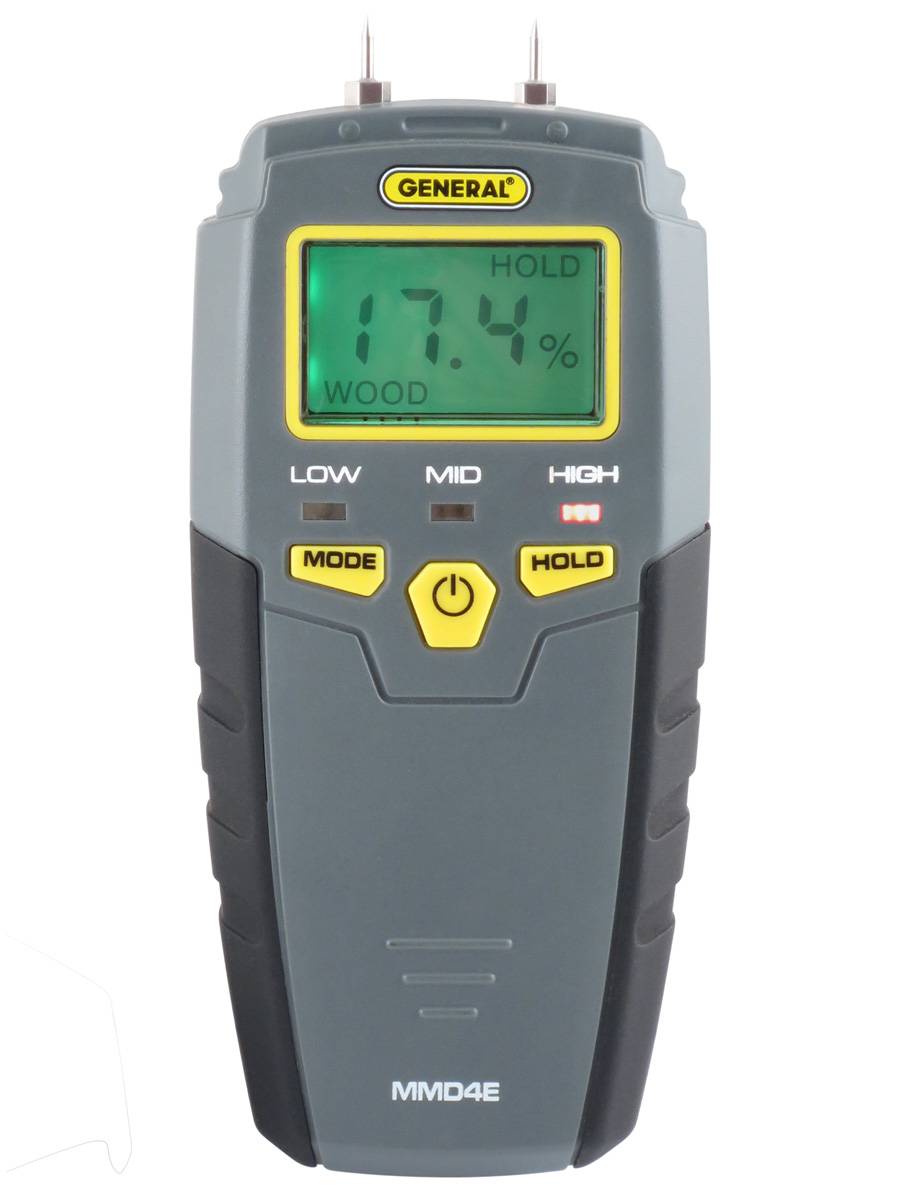
General Tools Moisture Meter
Helpful if you want pin readings in wood framing as well as drywall.
Energizer Vision Ultra HD Rechargeable Headlamp
Recommended when inspecting an attic or the space above the stain.
Smart Water Leak Detectors (3-Pack)
Helpful near the water heater, air handler, or upstairs bathroom once you know the source.
If you're looking for the tools, parts, or maintenance products mentioned in this guide, visit the Sentinel Solutions Center. We only recommend products that we believe are genuinely helpful for homeowners and professionals.
Sentinel guidance is written in-house and grounded in public-safety and government technical references.
Make this part of your home's permanent record
Ceiling leaks are easier to explain — and easier to compare over time — when the details live in one place. Sentinel Home helps homeowners keep photos, dates, affected areas, repairs, and the equipment above the ceiling on record.
Sentinel Home is in early access. Join the list to be notified when you can add your equipment to your home record.
Ask Sentinel AI about your home.
Ask Sentinel AI for personalized guidance based on your home's systems, equipment, maintenance history, and repair needs.