
How to Find a Hidden Water Leak10 Places to Check Before Calling a Plumber
Musty smells, rising water bills, and stains that keep coming back usually have a source you can narrow down safely. Here's where to look, what to look for, and which tools actually help.

Sentinel Home may earn a commission from qualifying purchases at no additional cost to you. Affiliate relationships do not determine our recommendations.
A hidden leak rarely starts with water pouring through the ceiling.
Sometimes it's a musty smell. A slightly higher water bill. A stain that keeps returning. Flooring that suddenly feels different. A cabinet that smells damp. Or a water meter that appears to move when nobody is using water.
The challenge isn't simply knowing that moisture exists. It's figuring out where it's coming from before a small problem becomes a larger one.
The good news: homeowners can perform several useful — and relatively safe — checks before walls are opened or a plumber is called. The key is knowing where to look, what you're looking for, and which tools actually help.
If you suspect a hidden water leak, check these areas first:
- Under sinks and inside cabinets
- Toilets and bathrooms
- Washing machine connections
- Dishwasher
- Refrigerator water line
- Water heater
- HVAC condensate system
- Ceilings and walls below plumbing
- Crawlspace, basement, or slab-adjacent areas
- Your water meter
Before buying anything, decide whether the leak appears active, intermittent, or historical. If water is actively entering the home, approaching electrical equipment, damaging ceilings or floors, or you cannot safely locate the source, stop troubleshooting and contact a qualified professional.
First: is the leak actually active?
A stain can remain long after the moisture behind it has dried. And water can travel a surprising distance before it becomes visible. So the first job is deciding whether you're looking at a current problem or an old one.
Look for:
- New or expanding discoloration
- Dampness to the touch
- Soft drywall
- Swollen trim or cabinets
- Peeling or bubbling paint
- Warped flooring
- A musty odor
- Visible droplets
- Moisture that returns after using a particular fixture
Don't start by opening a wall. Start by collecting clues.
When did the moisture appear? What plumbing, roofing, or HVAC equipment is nearby? What happened immediately before you noticed it? These three answers can narrow the problem considerably before anything gets torn apart.
1. Look underneath every nearby sink
Empty the cabinet and inspect, one by one:
- Supply-line connections
- Shutoff valves
- Faucet connections
- Drain fittings and the P-trap
- Garbage disposal
- Dishwasher connection
- The cabinet floor itself
Look for more than active dripping. Mineral deposits, discoloration, swelling, corrosion, and old water marks often reveal a slow leak that only happens occasionally.
Run the faucet while watching the drain connections, then keep watching for a minute after you shut the water off. Drain-side leaks usually appear only while water is flowing. Supply-side leaks are under constant pressure and may drip even when nothing is running.
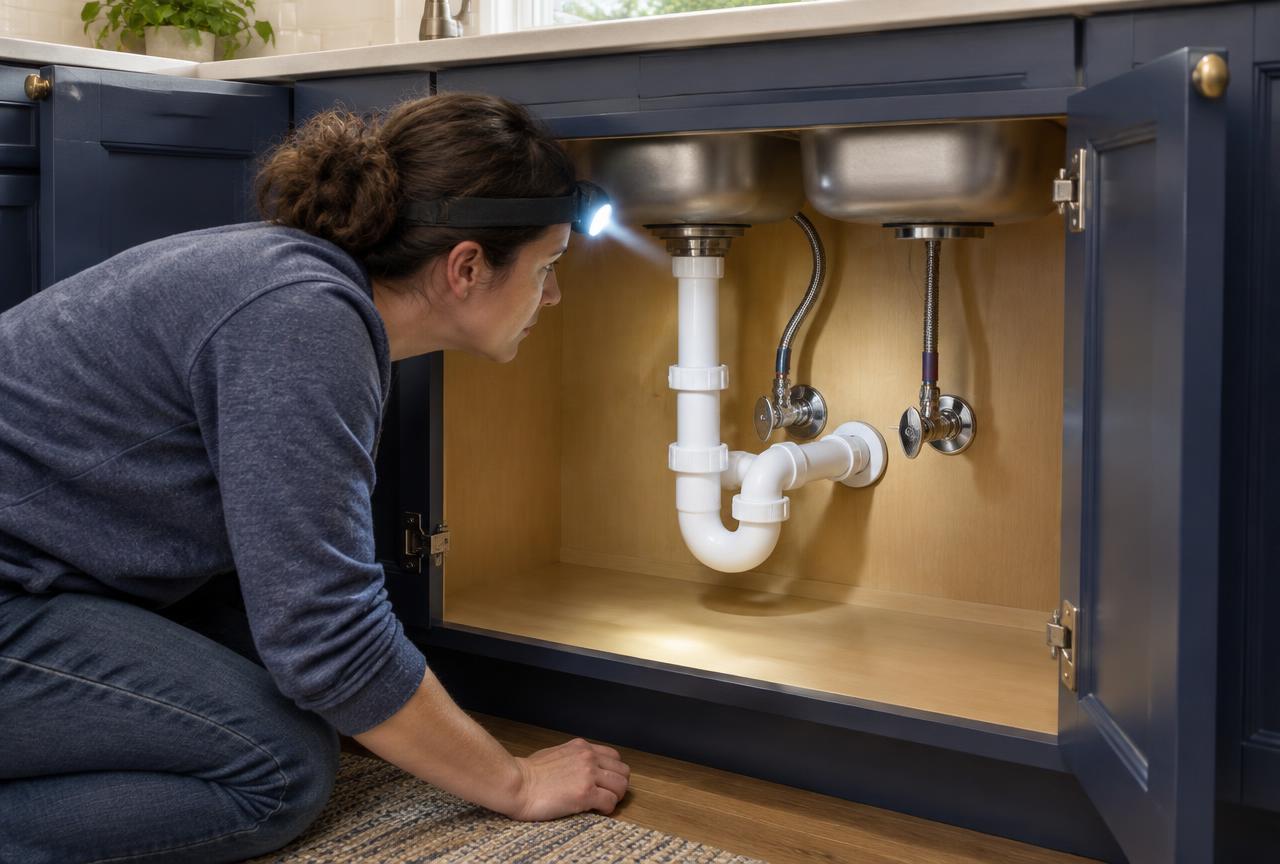
Energizer Vision Ultra HD Rechargeable Headlamp
Helpful if you're inspecting dark cabinets and need both hands free to feel fittings and move items.
Why here: Under-sink leaks are often a thin film of moisture on the back of a fitting. A bright, hands-free light makes those easier to see than a phone flashlight held at an angle.
If an accessible compression nut is weeping and the water is shut off, a gentle snug — often no more than a quarter turn — may stop it. Don't over-tighten plastic or older fittings; a cracked fitting needs replacement, not more force.
WORKPRO 2-Piece Extra-Wide Adjustable Wrench Set
Recommended when you need to snug an accessible supply-line or compression connection.
Why here: A wide-jaw adjustable wrench fits the range of nut sizes found under typical sinks and toilets.
2. Check toilets, tubs, and showers
- Toilet base and wax-ring area
- Toilet supply connection and shutoff valve
- Tub and shower edges
- Shower enclosure and door seals
- Faucet and valve penetrations
- Sink plumbing
- Adjacent baseboards
If a ceiling stain sits below a bathroom, test one thing at a time. Does moisture appear after showering, after flushing, or after draining a full tub? The answer points to very different repairs. Our guide to water stains on the ceiling — roof leak, plumbing leak, or HVAC problem walks through that comparison in detail.
3. Inspect the washing machine
- Hot- and cold-water hoses
- Hose connections and shutoff valves
- Drain hose and standpipe
- The floor and the wall behind the machine
Look for bulging, cracking, corrosion, and moisture around fittings. Supply hoses are under pressure all the time, even when the washer is off.
Upstairs laundry rooms deserve particular attention. A failure there can reach ceilings and rooms below before anyone notices. This is one of the places where a simple leak detector earns its keep — see where to put water leak detectors.
4. Check underneath and around the dishwasher
Dishwasher leaks often stay hidden behind cabinetry. Look for:
- Swollen flooring in front of or beside the unit
- Moisture around the toe-kick
- Discoloration in the adjacent sink cabinet
- Dampness near the supply and drain connections
- Water that appears only during wash or drain cycles
Don't pull out a hardwired or tightly installed dishwasher unless you can do it safely. Turn off power at the breaker and water at the shutoff first — or leave removal to a plumber or appliance technician.
5. Inspect the refrigerator water connection
A refrigerator with an ice maker or water dispenser adds another pressurized water line — usually hidden behind the appliance.
- Supply tubing (look for kinks, cracks, or brittle plastic)
- The shutoff connection at the wall or under the sink
- The connection at the refrigerator
- The floor around and behind the appliance
A leak doesn't need to release gallons per minute to cause damage. Small leaks become expensive when they're allowed to remain small for a very long time.
6. Inspect the water heater — from the top down
Water at the bottom of a water heater does not automatically mean the tank failed. Start at the top and work down:
- Supply connections and shutoff valve
- Temperature and pressure (T&P) relief valve and discharge pipe
- Drain valve
- Tank jacket
- Drain pan
- The floor surrounding the heater
For a step-by-step breakdown, see Water Heater Leaking From Bottom? 7 Causes and What to Do Right Now.
Gas valves, venting, burners, and electrical connections on a water heater are work for a licensed professional. If water is near a gas appliance's controls or electrical components, call a pro.
7. Don't forget the HVAC system
Water near HVAC equipment may be condensate — not a plumbing leak at all. Possible sources include:
- A restricted condensate drain
- An overflowing auxiliary pan
- A condensate pump problem
- A damaged pan
- A frozen coil thawing
- Poorly insulated cold surfaces sweating
- Unrelated plumbing nearby
If you're seeing water around an air handler or furnace in summer, read AC Condensate Drain Clogged? What Homeowners Should Do Before Water Damage Starts.
8. Investigate ceilings and walls — but don't guess
A visible stain tells you where moisture became visible. It doesn't necessarily tell you where the leak started.
Water can travel along:
- Framing
- Pipes
- Ductwork
- Drywall
- Insulation
- Roof decking
That's why comparing moisture levels across an area is more useful than staring at the stain itself.
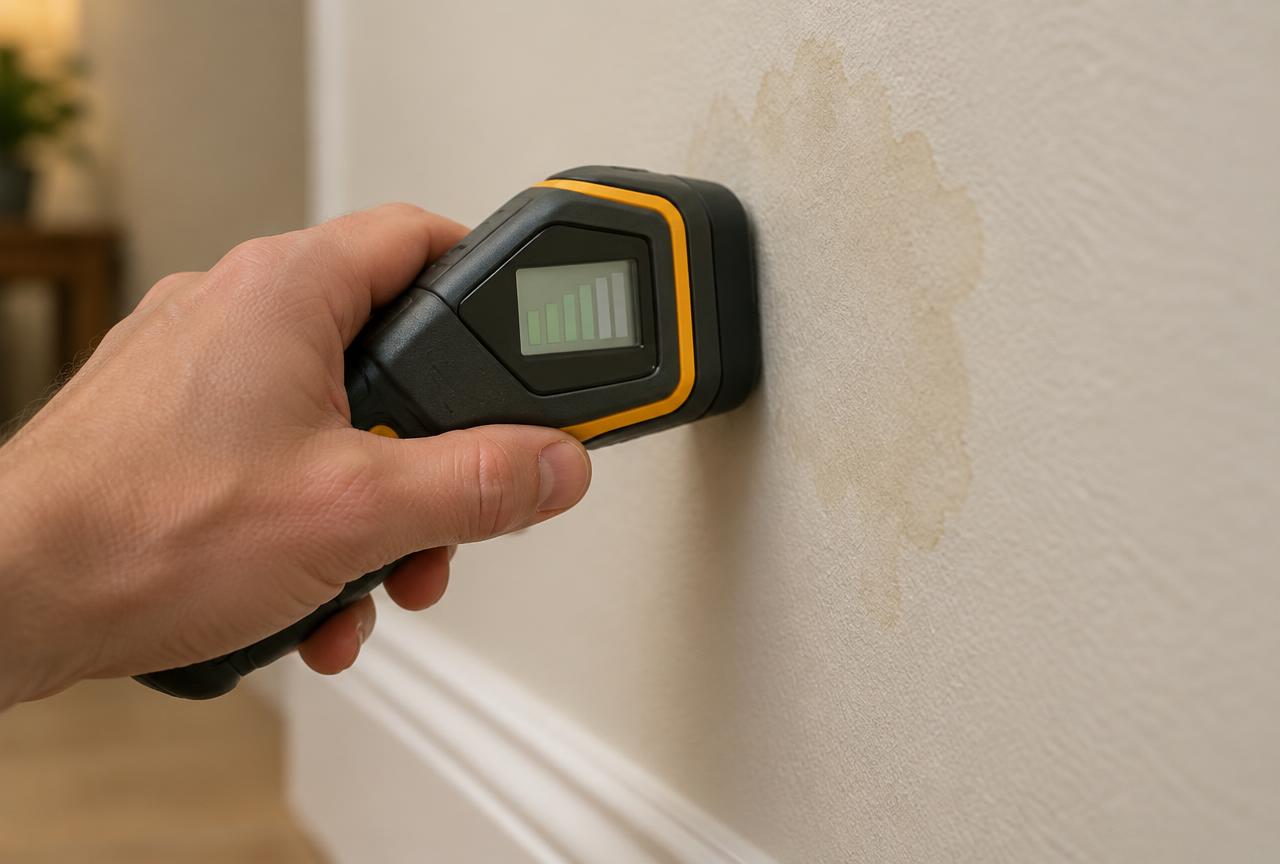
A pinless moisture meter can help compare a suspicious area with apparently dry surrounding material — without making holes.
Helpful when
- A ceiling stain appears
- Drywall smells musty
- You're checking around a window
- You're following up after a known leak
- You want to compare moisture patterns before opening finished material
What it cannot do
A moisture meter cannot tell you why moisture is present. It cannot determine by itself whether the source is plumbing, roofing, or HVAC.
Klein Tools ET140 Pinless Moisture Meter
Recommended when you want to map where a stain is still damp before anything is opened.
Why here: Readings are relative. Scanning in a grid from the stain outward shows whether moisture is concentrated, spreading, or already dry.
Take several readings. You're looking for a pattern, not one scary number.
9. Check the lowest parts of the house
Gravity always wins. Check:
- Basement and utility room
- Crawlspace
- Areas beneath bathrooms and kitchens
- Plumbing penetrations
- Foundation walls
- Sump equipment
Look for damp soil, staining, efflorescence (white mineral residue), wood discoloration, wet insulation, musty odors, and active droplets.
Don't enter a crawlspace or basement with standing water if outlets, cords, appliances, or equipment could be energized. Avoid areas with sagging framing, damaged supports, pests, or strong odors. If water has reached wiring or an electrical panel, call a licensed electrician and stay out.
Klein Tools NCVT3P Non-Contact Voltage Tester with Flashlight
Helpful if moisture is near outlets, cords, or equipment and you want an extra screening step before approaching.
Why here: It can indicate possible voltage without contact. It is a screening tool, not a guarantee — when in doubt, stay out of the water.
Rechargeable LED Headlamp
May simplify inspecting crawlspaces and utility rooms where there is little or no overhead lighting.
Why here: Low areas are where leaks collect, and they're usually the darkest places in the home.
10. Use your water meter as a clue
Turn off every fixture and water-using appliance — including ice makers, irrigation, and water softeners mid-cycle. Then watch the meter's low-flow indicator (often a small dial or triangle) for 15–30 minutes, or note the reading and check again later without using water.
Continued flow suggests water is being used somewhere — it does not automatically prove a concealed pipe leak. Common explanations include a running toilet, a dripping faucet, irrigation, a softener regenerating, or an outdoor spigot. If you've ruled those out and the meter still moves, a plumber can perform leak detection.

When to stop troubleshooting and call a professional
- Water is actively entering the home and you can't find the source
- Water is near electrical equipment, outlets, or a panel
- A ceiling is sagging or drywall is soft
- The water meter keeps moving after you've ruled out fixtures
- Moisture keeps returning after a repair
- The leak involves gas appliances, the main line, or a slab
- You notice spreading mold growth
If water is actively flowing, shut off the main water supply first. Knowing where that valve is before an emergency is one of the most useful things a homeowner can do.
Once you find the source, document it.
- Date discovered
- Photos
- Source
- Affected area
- Repair performed
- Contractor used
- Parts installed
- Cost
- Follow-up inspection date
A repaired leak becomes valuable information about your home. Don't lose it. Sentinel Home keeps those records with the equipment and rooms they belong to.
Key takeaway
Finding a hidden water leak isn't about randomly opening walls. Follow the evidence.
Look. Test. Compare. Isolate. Then act.
Once the immediate problem is solved, install early-warning protection where it makes sense so the next leak has less time to hide.
Know Your Home. Protect Your Investment.
Affiliate disclosure: Sentinel Home may earn a commission from qualifying purchases at no additional cost to you. Affiliate relationships do not determine Sentinel recommendations or product rankings.
Frequently asked questions
How do I know if I have a hidden water leak?
Common signs include a musty odor, a stain that returns or grows, soft drywall, swollen trim or flooring, an unexplained rise in your water bill, or a water meter that moves when no water is being used.
Can I check my water meter for a leak?
Yes. Turn off all fixtures and water-using appliances, then watch the meter's low-flow indicator. Movement suggests water is being used somewhere, but it may be a running toilet, irrigation, or a softener rather than a concealed pipe leak.
Does a moisture meter find the source of a leak?
No. A moisture meter helps compare moisture in a suspicious area with surrounding material. It can show a pattern, but it cannot tell you whether the cause is plumbing, roofing, or HVAC.
Is a ceiling stain always directly below the leak?
Not necessarily. Water can travel along framing, pipes, ductwork, and insulation before it becomes visible, so the stain shows where moisture appeared, not always where it started.
When should I call a plumber for a hidden leak?
Call a professional when water is actively entering the home, is near electrical equipment, a ceiling is sagging, the meter keeps moving after you rule out fixtures, or the leak keeps returning.
Make this part of your home's permanent record
Once you find a leak, the details matter later: where it was, what was repaired, who did the work, and when to check again. Sentinel Home keeps that history with your home so it's there when you need it.
Sentinel Home is in early access. Join the list to be notified when you can add your equipment to your home record.
Ask Sentinel AI about your home.
Ask Sentinel AI for personalized guidance based on your home's systems, equipment, maintenance history, and repair needs.