
Where Should You Put Water Leak Detectors?10 Places That Can Help Prevent Expensive Water Damage
A small leak can stay hidden behind an appliance, underneath a cabinet, or beside a water heater long enough to damage flooring, drywall, cabinets, and other materials. Leak detectors can provide earlier warning — but placement matters.
If you only protect a few places, start here
For many homes, prioritize:
- 1. Water heater
- 2. Washing machine
- 3. Kitchen sink / dishwasher
- 4. Refrigerator water line
- 5. HVAC condensate area
Then customize coverage based on your home's equipment, layout, prior leaks, and the places where water could cause significant damage.
The goal isn't to put sensors everywhere. The goal is to identify the locations where earlier warning could meaningfully reduce damage.
1. Next to your water heater
A water heater has several potential water sources: the tank itself, supply fittings, shutoff and relief valves, connections, drain components, and the plumbing immediately around it. Any one of them can weep slowly long before anything dramatic happens.
Water heaters also tend to live in garages, closets, basements, and utility rooms — areas most people don't visit daily, which is exactly why a small leak can run for weeks.
Where to place the detector
Place it on a dry surface near the tank or drain pan, at the point where leaking water would naturally travel and collect.
What else to inspect
Look periodically for:
- Corrosion
- Rust
- Staining on the floor or nearby surfaces
- Dripping at valves or fittings
- Moisture around the base
- Changes around valves or connections since the last time you looked
A detector reports water that has already escaped. It does not replace periodic inspection or the maintenance the manufacturer recommends. If you want the maintenance side, see how to flush a water heater.
2. Behind your washing machine
Laundry leaks generally involve one of four things:
- Supply hoses, which are under pressure whenever the valves are open
- Supply and drain connections at the wall
- Drainage — a standpipe or drain that backs up during a discharge cycle
- The appliance itself leaking during operation
An upstairs laundry room raises the potential consequences, because water can move into ceilings, walls, and finished rooms below before anyone notices it upstairs.
Placement
Position the detector at the lowest likely collection point around the supply and drain area, behind or beside the machine, without interfering with the appliance or its hoses.
Not sure this is what's happening in your home?
Homeowners often arrive with one symptom and find the cause somewhere else entirely. Start from what you're actually noticing and Sentinel will point you to the right guide.
Educational guidance only — nothing to buy at this step.
3. Under the kitchen sink
That small cabinet often contains more plumbing than anywhere else in the house:
- Supply lines
- Shutoff valves
- Faucet connections
- Drain plumbing and the trap
- A garbage disposal
- Dishwasher supply and drain connections
A slow leak in a closed cabinet can damage the cabinet floor, the base, and the flooring underneath long before water appears outside it.
Placement
Place the detector flat on the cabinet floor, toward the back where water from these connections would collect first.
4. Near the dishwasher
Dishwasher water can escape from several places:
- Supply connections
- Drainage components and the connection at the sink or disposal
- Door and seal problems
- Plumbing connections behind or beneath the unit
- Components underneath the appliance
Dishwasher plumbing connections are frequently accessible under the kitchen sink, so monitoring that cabinet often covers both appliances at once. Don't disassemble the dishwasher or pull it out to place a sensor — monitor the accessible area instead, and let an appliance professional open the machine if you suspect an internal leak.
5. Behind the refrigerator
A refrigerator with an ice maker or a water dispenser has a water supply connection — which makes the refrigerator a plumbing location, not just an appliance. Those small supply lines and their fittings are a common source of slow, quiet leaks that travel under flooring.
Placement
Place a sensor near the water connection, or at another accessible low point where escaping water would travel. Do not place a sensor somewhere you can't reach to test it or change its batteries.
6. Around HVAC equipment
Air conditioners remove moisture from indoor air. That condensate normally leaves through the HVAC drainage system. Problems with:
- Condensate drains
- Drain pans
- Condensate pumps
- Drain restrictions or blockages
- Overflow conditions
can all result in water appearing around the equipment.
An important distinction
A point moisture detector can be particularly useful here, because HVAC condensate is not a pressurized plumbing leak. It arrives slowly, at a predictable low point, which is exactly the pattern a point sensor is good at catching.
Placement
Near the condensate pan, or another safe location where overflow would collect — without resting on electrical components.
A water detector does not replace an appropriate HVAC float switch, wet switch, a properly functioning condensate system, or professional HVAC service. Never bypass or disable an HVAC safety device. If water keeps appearing, the drainage system needs attention — see what to do about a clogged condensate drain.
7. Under bathroom sinks
Bathroom vanities repeat the kitchen pattern in a smaller space:
- Shutoff valves
- Supply lines
- Drain connections and the trap
- Faucet plumbing above the deck
Place the detector on the vanity floor where leaking water would naturally collect, and keep it clear of stored cleaning supplies so it stays exposed.
8. Near toilets
Toilets have several potential water sources:
- The supply connection at the wall or floor
- The shutoff valve
- The tank and the connection between tank and bowl
- The base and the surrounding plumbing components
An upstairs bathroom adds consequences: water that reaches flooring can affect the ceiling and rooms below. A sensor placed beside the base, on the side where the supply enters, is usually the most useful spot.
9. Near your sump pump
Water detection around a sump area adds a warning layer for a part of the home where water arriving in the wrong place matters immediately.
Be clear about what it does, though: a leak detector does not make a failed sump pump work. It may simply give you earlier notification that water is reaching an area where it shouldn't be — which is often enough time to act.
10. Anywhere your home has had water before
This is the location most checklists leave out, and it may be the most useful one. If your home has previously had water near:
- Plumbing lines or fixtures
- The basement or crawl space
- An appliance
- A window or exterior wall
- The utility room
- HVAC equipment
- A bathroom
- Any other part of the building
that history should influence your monitoring priorities more than a generic list does. Water tends to reappear in the same places, because the conditions that allowed it the first time often haven't fully changed.
Your home's actual history matters more than a generic checklist. Sentinel Home keeps that history in one place — equipment, maintenance, and past water events — so next year's decisions start from what your home has actually done.
Ready to take the next step?
Sentinel keeps a short, considered list of options for this exact problem — with what each one is for, and when you probably don't need it.
Buying nothing is a valid outcome. Many of these steps cost nothing at all.
If you only have 3 sensors
For many homeowners, a reasonable starting order is:
- #1 Water heater
- #2 Washing machine
- #3 Kitchen / dishwasher area
Then expand based on what your home actually has:
- A refrigerator water connection
- Where the HVAC equipment is located
- Upstairs plumbing and laundry
- Basement and crawl space
- A sump system
- Previous water events
- Your home's layout and what sits below each water source
These aren't universally the three highest-risk locations in every house. They are a practical starting point for a typical home with a tank water heater, a laundry room, and a kitchen with a dishwasher.
Basic vs. smart vs. whole-home leak protection
Basic water alarm
Detects water at one spot and sounds a local alarm. Helpful for homeowners who are usually home and would hear it.
Smart water detector
Detects moisture and, depending on the device, sends remote or app notifications. Helpful for travel, second homes, basements, utility areas, and anyone who wants to know about water while away from the house.
Whole-home monitoring with automatic shutoff
Monitors the home's plumbing system and, depending on the system, may automatically shut off the main water supply when certain leak conditions are detected. Helpful for homeowners whose property and risk profile justify the higher equipment and installation cost.
These systems are significantly more expensive than point sensors and often require professional installation on the main water line. They are not necessary or appropriate for every home.
Helpful water-protection options
A short list, not a shopping list. Each of these solves one specific problem discussed above.

Govee Water Leak Detector
- Solves
- Provides localized water detection with an audible alarm and app notification for one specific high-risk spot.
- Useful for
- Water heaters, laundry rooms, basements, utility areas, and other individual locations where water would sit unnoticed.
- You may not need it when
- That area already has reliable leak detection you test periodically.
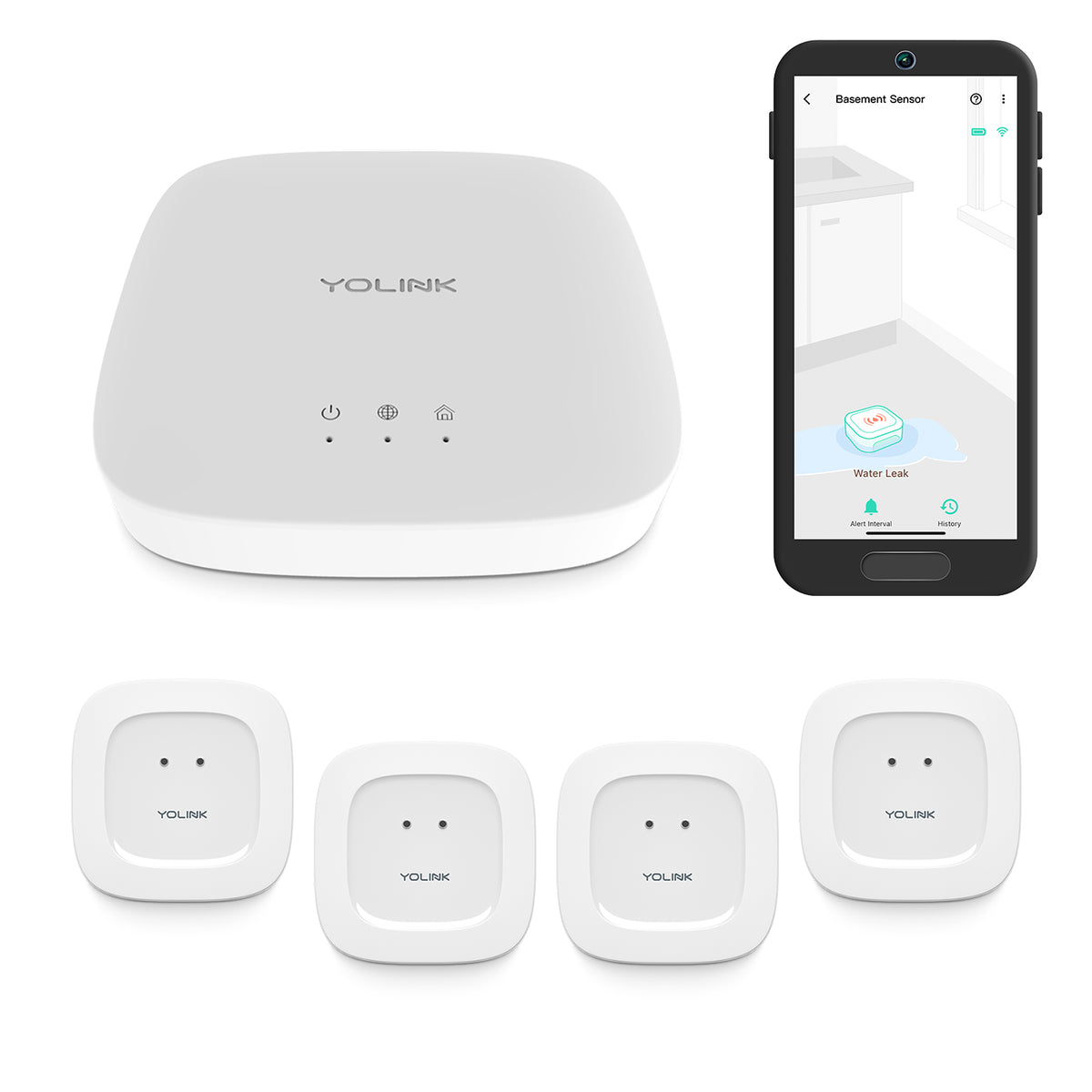
YoLink Smart Water Leak Sensor
- Solves
- Adds remote notification for locations you rarely walk past, so moisture is reported rather than discovered later.
- Useful for
- Travel, second homes, basements, crawl spaces, and utility rooms away from daily traffic.
- You may not need it when
- There is no reliable connectivity where the sensor would live, or a local audible alarm is enough for how you use the home.
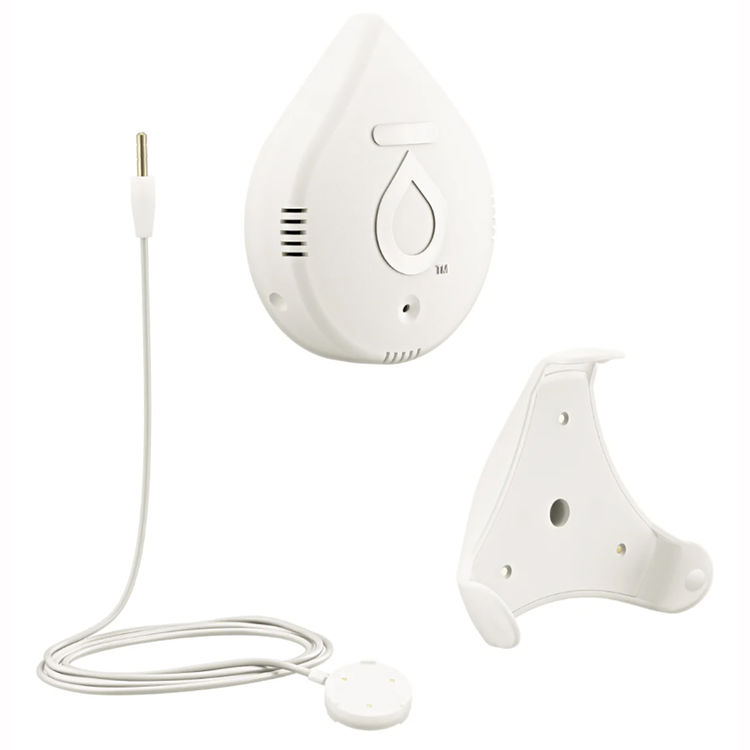
Moen 920-005 Flo Smart Water Leak Detector, 3-Pack
- Solves
- Covers three separate locations at once — commonly the water heater, the laundry area, and a sink cabinet.
- Useful for
- Homeowners protecting several likely leak points instead of a single appliance.
- You may not need it when
- You only need coverage in one place, or those locations already have equivalent monitoring.
Sentinel does not yet have a verified listing for a whole-home water monitor with automatic shutoff, so this level of protection is described here as a category rather than a specific product. If you're considering one, plan for professional installation on the main line, confirm compatibility with your plumbing, and treat it as a complement to point sensors rather than a replacement for them.
Before buying sensors, walk the house. Look at the accessible areas around the sinks, the water heater, the washing machine, the dishwasher, the refrigerator water connection, and the HVAC condensate system.
If appropriate protection is already installed and working — and you've tested it — extra sensors may not add anything. The goal isn't to fill your home with sensors. It's to identify the few places where earlier warning could make a meaningful difference.
Create your home leak protection map
Every home is different:
- A home with an upstairs laundry room carries different risk from one with laundry in the basement.
- A refrigerator without a water line doesn't need water-line monitoring.
- A home with two water heaters has different priorities from one with a single unit.
- A home with a history of basement water should treat that history as useful Home Health information.
Sentinel Home helps homeowners understand what's in the home, identify potential risks, organize maintenance, and take action before small problems become expensive.
- Water heater area checked
- Washing machine supply and drain checked
- Kitchen sink and dishwasher connections checked
- Refrigerator water connection checked
- HVAC condensate area checked
- Bathroom sinks and toilets checked
- Basement and sump area checked
- Previous leak locations reviewed
- Main water shutoff location confirmed and reachable
Keep this in your home's record
Sentinel Home holds the details of each system in one place — equipment information, manuals, maintenance history, and what to check next season — so the next time this comes up, the answer is already there.
Sentinel Home is preparing for launch. Early access is free to join.
Download the free placement guide
A one-page reference you can keep with your home records: a simple diagram of the ten locations, the walk-through checklist, and space to write down where your sensors are, where your main shutoff is, and when you last tested everything.
Frequently asked questions
Where should I put water leak detectors?
Start with the places that combine a water source with a slow discovery time: the water heater, behind the washing machine, under the kitchen sink near the dishwasher connections, at the refrigerator water line, and around the HVAC condensate area. Then add locations based on your home's layout, upstairs plumbing, basement, and any place water has appeared before.
Should I put a leak detector near my water heater?
For most homes it's the first place worth monitoring. Water heaters have multiple potential leak points and usually sit in a garage, closet, basement, or utility room that nobody checks daily. Place the detector on a dry surface near the tank or drain pan where escaping water would collect.
Should I put one behind my washing machine?
Yes, especially with an upstairs laundry room. Supply hoses are pressurized whenever the valves are open, and a drain that backs up during a discharge cycle can release a lot of water quickly. Place the sensor at the lowest collection point near the supply and drain area.
Do I need a water detector behind my refrigerator?
Only if the refrigerator has an ice maker or water dispenser, which means it has a water supply line. Those small lines and fittings can leak slowly behind the unit. If your refrigerator has no water connection, this location isn't a plumbing risk.
Can a leak detector detect an HVAC condensate leak?
It can detect water that has already escaped near the equipment, which is useful because condensate overflow arrives slowly at a predictable low point. It does not replace a float switch, a properly functioning condensate drain, or professional HVAC service, and it should never be used in place of an HVAC safety device.
How many water leak detectors does a house need?
There's no fixed number. Many homeowners start with three — water heater, washing machine, and the kitchen sink or dishwasher area — then expand to the refrigerator line, HVAC area, upstairs bathrooms, and the basement or sump area based on their home. Coverage should follow risk, not a quota.
Are smart leak detectors worth it?
They're worth it when nobody would hear a local alarm. If you travel, own a second home, or are monitoring a basement or utility area you rarely enter, remote notification is the entire value. If you're home most of the time and the location is within earshot, a basic alarm may be enough.
Is an automatic water shutoff better than individual leak sensors?
They solve different problems. Point sensors tell you water has appeared in a specific place, including places a main-line system can't see, such as an HVAC drain pan. A whole-home monitor with automatic shutoff can stop supply water during certain leak conditions, but it costs substantially more and usually requires professional installation. Many homeowners who install one keep point sensors as well.
Sentinel Homeowner Essentials
Helpful products commonly used by homeowners and professionals.
Homeowners performing this maintenance commonly use the following tools.
Spending $25–$75 today on preventive maintenance can often help homeowners avoid repairs that cost hundreds or even thousands of dollars later. Sentinel Home recommends products that support long-term home protection — not impulse purchases.
Govee Water Leak Detector
Helpful for simple, loud local alerts at the highest-risk spots.
YoLink Smart Water Leak Sensor
Recommended when you want long-range phone alerts in basements and garages.
Moen 920-005 Flo Smart Water Leak Detector, 3-Pack
Useful if you want app alerts that also report temperature and humidity.
Smart Water Leak Detectors (3-Pack)
May simplify covering several rooms on a budget.
If you're looking for the tools, parts, or maintenance products mentioned in this guide, visit the Sentinel Solutions Center. We only recommend products that we believe are genuinely helpful for homeowners and professionals.
Sentinel guidance is written in-house and grounded in public-safety and government technical references.
- U.S. Environmental Protection AgencyWaterSense — Fix a Leak Week and household leak guidance
- U.S. Environmental Protection AgencyMold and Moisture — Preventing Moisture Problems
- U.S. Department of EnergyWater Heating — Maintenance and Operating Guidance
- U.S. Department of EnergyMaintaining Your Air Conditioner
Make this part of your home's permanent record
Sentinel Home helps homeowners keep the details of each system in one place — equipment information, manuals, maintenance and repair history, past water events, and Home Health information — so leak protection follows your home instead of a generic checklist.
Sentinel Home is in early access. Join the list to be notified when you can add your equipment to your home record.
Ask Sentinel AI about your home.
Ask Sentinel AI for personalized guidance based on your home's systems, equipment, maintenance history, and repair needs.