
Water Heater Leaking From Bottom?7 Causes and What to Do Right Now
Water at the base of a water heater can come from a drain valve, a supply connection, the relief system, condensation, nearby equipment, or the tank itself. Here is how to tell the difference before you spend money.
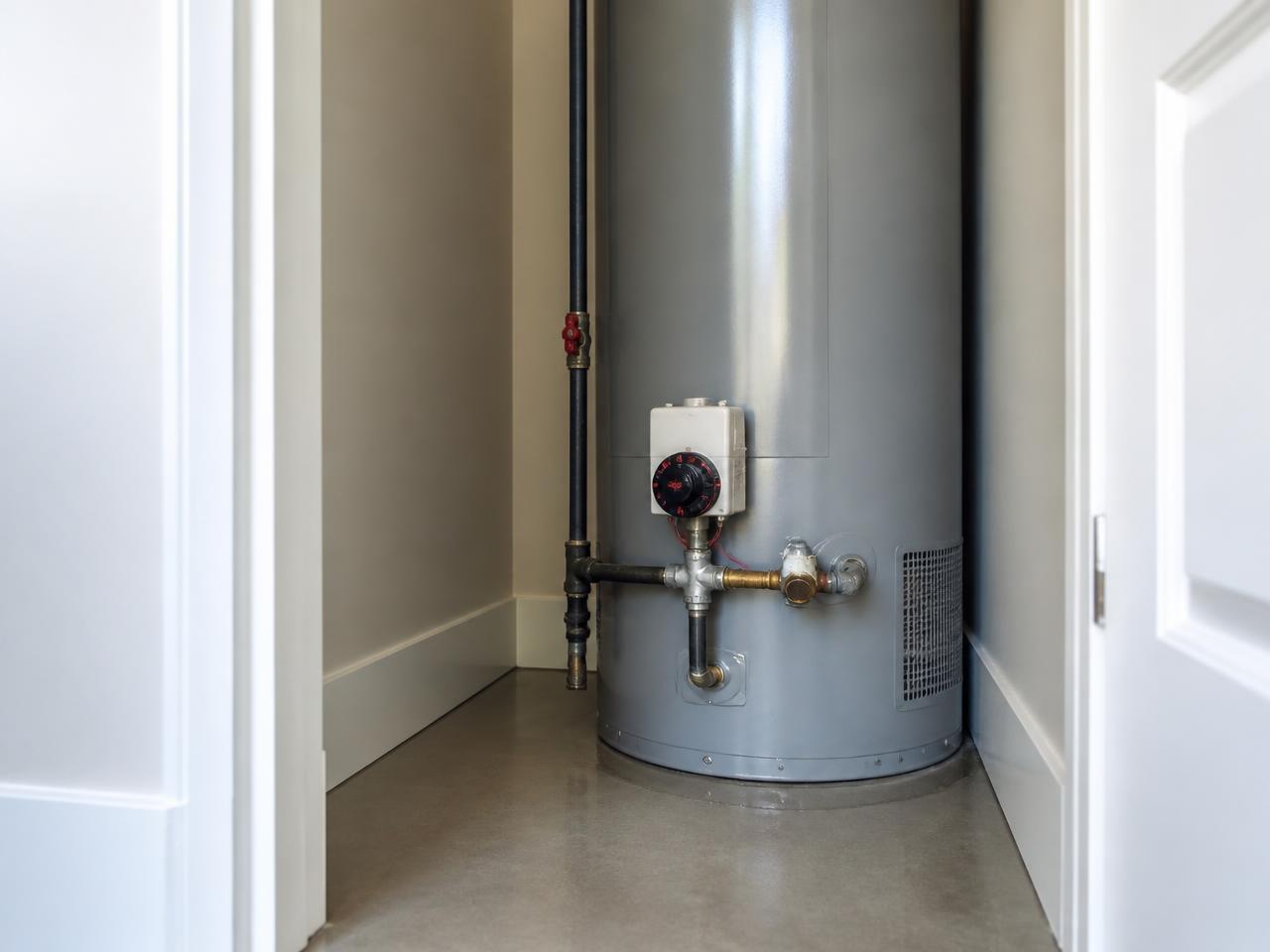
Find the source before you decide anything
If your water heater is leaking from the bottom, check four things in this order: the drain valve, the plumbing connections above the heater, the temperature and pressure relief system, and the tank itself.
A leaking connection or drain valve may be repairable. If water is coming through the body or the bottom seam of the tank because the inner tank has corroded, the water heater generally needs to be replaced.
Do not try to patch a corroded tank with tape, epoxy, sealant, or any similar temporary product. A water heater tank is a pressure vessel.
Finding water around the bottom of your water heater can mean anything from a simple leaking fitting to a failed tank. The most important step is figuring out where the water is actually coming from before assuming the tank has failed.
Water can run down the outside of a water heater and collect at the bottom, which makes a leak from above look exactly like a failed tank.
What should you do first?
If water is actively leaking or collecting:
- Keep people away from standing water near electrical equipment.
- If you can do it safely, stop the water supply to the heater using the shutoff valve above it or the main shutoff.
- Electric water heaters may need power shut off at the correct breaker before anything is serviced or drained.
- Gas water heaters need extra care. If you smell gas, leave the area and call the gas utility or emergency service instead of troubleshooting.
- Protect nearby flooring, boxes, and belongings from further water damage.
If you are not sure how to isolate the appliance safely, stop there and contact a qualified plumber. Nothing below is worth an injury.
Why water shows up at the bottom
Do not start with the conclusion that the tank has ruptured. Water follows gravity.
A small leak several feet above the floor can run down the tank jacket and pool underneath it. Before making any repair-versus-replace decision, find the highest point where water is visible. That single observation changes the answer more than anything else on this page.
Cause 1 — The drain valve is leaking
What you're seeingWater at or just below the small valve near the floor, sometimes with a slow drip from the threaded outlet where a hose attaches.
- The valve was not fully closed after a flush
- Sediment is holding the valve open slightly
- The valve body is cracked or worn
- The connection where the valve enters the tank is weeping
- 1Dry the valve completely and watch it with a flashlight.
- 2Confirm the valve handle is fully closed.
- 3Note whether the water comes from the threaded hose outlet, the valve body, or where the valve enters the tank.
If water is leaking from the valve body or from where the valve attaches to the tank, capping the outlet does not repair the underlying problem. That is plumber work.
Affiliate disclosure: Sentinel Home may earn a commission from qualifying purchases at no additional cost to you. Affiliate relationships do not determine Sentinel recommendations or product rankings.
HQMPC 3/4" Brass Garden Hose Cap with Washer
A 3/4-inch brass hose cap with a washer that can act as a secondary seal on a drain-valve hose outlet.
Why here: Helpful when a properly closed drain valve has a minor drip specifically from the threaded hose outlet. A cap does not repair a cracked valve, a leaking valve body, a failed tank connection, or a corroded water-heater tank.
Cause 2 — Water is running down from a supply connection
What you're seeingDampness on the top of the heater or along one side, with water collecting on the floor below.
- A leaking hot- or cold-water connection
- A failing flexible connector
- A loose or corroded fitting
- A leak in nearby pipe that drips onto the heater
- 1Use a flashlight on the top connections and follow the moisture upward.
- 2Look for droplets, corrosion, mineral deposits, moisture trails, and wet insulation around fittings.
- 3Dry everything, then run hot water in the house and watch where moisture returns first.
Replacing a pressurized water connection is not automatically a homeowner job. Do it only if the work matches your skill level and local requirements.
PLUMBINGMASTER Flexible Stainless Steel Water Heater Connector
A flexible stainless-steel water heater connector used when an existing connector is replaced.
Why here: Useful when a qualified diagnosis confirms that an existing flexible water connection is the source of the leak. Connector compatibility, sizing, local plumbing requirements, and installation conditions must be verified before replacement.
Cause 3 — The temperature and pressure relief system
Water may come from the temperature and pressure relief valve (the T&P valve) or from its discharge pipe, then travel to the floor and look like a tank leak.
The T&P valve is a critical safety component. Ongoing discharge can point to several different conditions, and it needs to be understood rather than silenced.
- Never plug, cap, or disable a T&P discharge line.
- Never install a shutoff valve on the discharge piping.
- If you cannot explain why the valve is releasing water, have it evaluated by a qualified plumber.
Never bypass a condensate safety switch or dismantle sealed HVAC components. When in doubt, a qualified HVAC professional should make the call.
Cause 4 — Condensation
Not every trace of moisture means the tank has failed. In certain operating and environmental conditions, condensation can form on and around a water heater, especially on a newly filled tank or in a humid space.
Dry the area completely, then check whether fresh water returns and where it starts. Water that keeps coming back still needs to be investigated.
Cause 5 — The tank is corroding internally
This is the one homeowners most need to understand. A tank-style water heater stores many gallons inside a steel pressure vessel. Over years, corrosion can eat through that inner tank.
Warning signs
- Water appearing from beneath the tank jacket rather than from a fitting
- Moisture around the lower seam
- Visible rust or corrosion on the shell
- Unexplained water that keeps returning underneath the heater
- An older tank combined with other failure symptoms
If the pressure vessel itself is leaking, replacing an external valve or applying a patch does not solve the failure. A leaking tank generally means replacement.
Sentinel does not recommend tape, epoxy, sealant, or similar patch products as a repair for a failed water-heater tank.
Cause 6 — The water is coming from nearby equipment
Before blaming the water heater, look at what shares the space with it:
- HVAC condensate drains and drain pans
- Washing machine hoses and drains
- Utility sinks
- Plumbing pipes overhead or in the wall
- Floor drains that back up
- Water treatment or softener equipment
Water travels farther than most homeowners expect. Finding the real source can prevent an unnecessary water-heater replacement.
Cause 7 — Recent maintenance exposed a weak drain valve
A water heater that was recently flushed may start dripping at the drain outlet, either because sediment is keeping the valve from sealing or because an aging valve no longer closes completely.
Do not repeatedly force an old valve. Determine whether the water is coming from the threaded outlet or from the valve body or tank connection. That distinction decides the next step.
Flushing itself is preventive maintenance, not a repair. If you want the correct procedure, read How to Flush a Water Heater.
Repair or replace?
- The leak is positively identified at an external, replaceable component
- The tank itself is dry and intact
- A supply connector is the confirmed source
- The drain valve is the confirmed source
- The repair is safe and economically reasonable for the age of the heater
- Water is escaping from the tank body
- The bottom seam is leaking
- Significant internal corrosion is suspected
- Leaks keep returning after repairs
- Tank condition and age make more repairs poor value
Protecting the area from water damage
A drain pan can provide secondary protection when it is correctly selected, installed, and drained. It manages water exposure. It does not repair a leak and does not remove the underlying cause.
Dorman 9-814 Water Heater Drain Pan
A water heater drain pan that catches and directs water away from flooring.
Why here: Homeowners must verify pan dimensions, drain requirements, and suitability for their installation before buying. A pan is containment, not a repair.
Pairing a pan with leak detection gives you earlier warning. Sentinel's guide on where to put water leak detectors covers the water heater area specifically.
Tankless systems have different maintenance requirements. A descaling and flushing kit is intended for compatible tankless systems and is not a solution for a leaking storage tank.
How to reduce water-heater leak risk
- Look around the heater a few times a year, not only when something goes wrong
- Check for corrosion, rust streaks, and mineral deposits
- Watch the plumbing connections above the heater
- Maintain the heater according to the manufacturer's guidance
- Know exactly where your water shutoff is before you need it
- Consider leak detection near equipment where water would sit unnoticed
- Use an appropriate drain pan where the installation warrants one
- Save installation dates, model information, and maintenance history in Sentinel Home
Take photos before you touch anything. Photograph the entire water heater, the exact place water first appears, the drain valve, the top plumbing connections, and the manufacturer label with the model information.
Those five photos help with troubleshooting, with the plumber's diagnosis, with warranty questions, with insurance documentation when appropriate, and with your own equipment record.
When to call a professional
- The tank itself appears to be leaking
- Significant water is accumulating
- You cannot identify the source
- The T&P valve keeps discharging
- Plumbing modifications are required
- There is any gas-related concern
- Electrical components may have been exposed to water
- You are not comfortable isolating the appliance safely
Sentinel's contractor experience is in early access. Until it opens, this routes to Sentinel's water-heater guidance and solutions.
Key takeaway
Water underneath a water heater does not automatically mean the tank has failed. Find the source first.
A leaking external component may be repairable. A leaking pressure vessel is a replacement problem. Sentinel Home's job is to help you understand the difference before you spend money.
Frequently asked questions
Does a water heater leaking from the bottom need to be replaced?
Not necessarily. Water can originate from a drain valve, a plumbing connection, the temperature and pressure relief system, or another nearby source. If the tank pressure vessel itself has corroded and is leaking, replacement is generally required.
Can I keep using a leaking water heater?
Do not ignore an active leak. The appropriate response depends on the leak source and severity. Significant leakage, electrical exposure, gas concerns, or suspected tank failure warrant prompt professional evaluation.
Can I cap a leaking water-heater drain valve?
A correctly sized cap with a washer may provide a secondary seal when a fully closed drain valve has only a minor drip specifically from its threaded hose outlet. It does not repair a cracked valve, a leaking valve body, a tank connection, or a failed tank.
Can I patch a leaking water-heater tank?
Sentinel does not recommend temporary patch products for a failed water-heater pressure vessel. If the tank itself has corroded through, replacement is generally the appropriate solution.
Why is there water underneath my water heater?
Possible sources include the drain valve, supply connections, temperature and pressure relief discharge, condensation, nearby equipment, or the tank itself. Trace the water upward before assuming the tank has failed.
Sentinel Homeowner Essentials
Helpful products commonly used by homeowners and professionals.
Homeowners performing this maintenance commonly use the following tools.
Spending $25–$75 today on preventive maintenance can often help homeowners avoid repairs that cost hundreds or even thousands of dollars later. Sentinel Home recommends products that support long-term home protection — not impulse purchases.
Dorman 9-814 Water Heater Drain Pan
Recommended when a tank sits on a finished floor where a small leak could spread.
HQMPC 3/4" Brass Garden Hose Cap with Washer
Helpful if the drain valve weeps slightly while you wait for service.
PLUMBINGMASTER Flexible Stainless Steel Water Heater Connector
Professionals commonly replace corroded supply connectors with flexible stainless lines.

Rheem ProTech Brass Water Heater Drain Valve
Useful when an aging plastic drain valve keeps dripping.
Smart Water Leak Detectors (3-Pack)
Helpful at the base of the tank so the next leak is caught early.
If you're looking for the tools, parts, or maintenance products mentioned in this guide, visit the Sentinel Solutions Center. We only recommend products that we believe are genuinely helpful for homeowners and professionals.
Sentinel guidance is written in-house and grounded in public-safety and government technical references.
Make this part of your home's permanent record
Don't wait for the next leak to start tracking your water heater. Sentinel Home helps homeowners keep the manufacturer and model, approximate age, manuals, maintenance history, repairs, warranty details, and replacement planning in one place.
Sentinel Home is in early access. Join the list to be notified when you can add your equipment to your home record.
Ask Sentinel AI about your home.
Ask Sentinel AI for personalized guidance based on your home's systems, equipment, maintenance history, and repair needs.