
Why Is My Heating Bill So High? 10 Things to Check Before Blaming Your Furnace
Colder weather, thermostat settings, a restricted filter, air leakage, ducts, insulation, and equipment condition all move a heating bill. Here is how to tell whether your home needs more heat or your system is working too hard.
Start with one question, not with a new furnace
A higher heating bill does not automatically mean your furnace or heat pump is failing. Colder weather, thermostat settings, a dirty filter, longer system runtime, air leakage, duct problems, insulation deficiencies, and aging equipment can all raise heating costs.
The first question is whether your home is simply requiring more heat — or whether your heating system is working harder than it should.
The ten checks below move from the easiest explanations to the ones that need a professional, so you find out which of those two situations you are in before spending anything.
What changed?
| What you're noticing | Where to start |
|---|---|
| Bill increased but the home feels normal | Weather, usage, and thermostat schedule |
| Heating system runs almost constantly | System performance and runtime |
| Some rooms stay cold | Airflow, ducts, and the building envelope |
| Cold drafts near doors and windows | Air leakage and weatherstripping |
| A heat pump seems to run continuously | Heat-pump behavior and backup heat |
| Utility usage jumped dramatically | Look for an abnormal load or a failing control |
| Not sure | Ask Sentinel and start from your own equipment |
1. Compare the weather before comparing bills
Heating demand tracks outdoor temperature closely. A month that was several degrees colder on average — or that had a long cold snap — asks your system for far more heat than the same month last year, with no change in the equipment at all.
- Compare this bill to the same month last year, not to last month.
- Check whether your utility shows heating degree days or a weather-adjusted comparison.
- Account for rate changes, which raise the bill even when usage is flat.
- Account for the household: more people home, more hot water, more heat.
2. Check your thermostat schedule
Schedules quietly drift. A hold left on from a holiday, a new setpoint someone nudged up, a dead battery that wiped a program, or a fan set to run continuously can all raise runtime without anyone noticing.
- Confirm the current setpoint and the schedule actually in effect.
- Look for a permanent hold or override left in place.
- Check whether the fan is set to ON instead of AUTO.
- Lowering the setpoint while you sleep or are away reduces heating demand, though the amount saved depends on your home, equipment, and climate.
Large thermostat setbacks on a heat pump can trigger electric backup heat during recovery, which is expensive. With a heat pump, gentler setbacks or the manufacturer's recommended strategy usually costs less than deep swings.
3. Check the HVAC filter
A filter loaded with dust restricts airflow. The blower works against that restriction, the system runs longer to deliver the same heat, and comfort drops. It is the cheapest thing on this list and the one most often overdue.
- Pull the filter and look at it in the light. Visible loading is enough reason to replace it.
- Match the exact dimensions and the airflow specification your equipment calls for.
- Higher filtration is not automatically better — a filter that is too restrictive for your system can reduce airflow and increase runtime.
- Check the manufacturer's documentation, or ask your HVAC contractor what specification suits your equipment.
Sentinel keeps a short list of replacement filters in the Solutions Center, but the right one is the one that matches your system — not the highest rating on the shelf.
Higher demand, or a system that's struggling?
Those two situations lead to completely different decisions. Start from what you're actually noticing — the bill, the runtime, the cold rooms — and work toward the right one.
Educational guidance only — nothing to buy at this step.
4. Pay attention to system runtime
Runtime is the most useful thing you can observe yourself. During very cold weather, long cycles can be completely normal — equipment is sized to keep up on a design-cold day, not to idle through it.
What matters is change. A system that used to cycle comfortably at 30°F and now runs continuously at 40°F is telling you something. So is a system that starts, stops after a few minutes, and starts again repeatedly.
- Note roughly how long cycles last and how often they repeat, along with the outdoor temperature.
- Compare that to what you remember from previous winters.
- Short repeated cycling, or continuous running with falling indoor temperature, is worth a professional look.
- Runtime alone does not diagnose a failure — it tells you whether to keep looking.
5. Check supply and return airflow
Basic visual checks only — nothing that requires opening equipment.
- Walk the house and confirm supply registers are open and not blocked by furniture or rugs.
- Confirm return grilles are not blocked, and that they are not caked with dust.
- Note rooms with noticeably weaker airflow than the rest of the house.
- Leave closed dampers, disconnected ducts, and anything inside the equipment cabinet to a professional.
6. Look for obvious door and window drafts
Heat you pay for and then lose through a gap costs the same as heat you use. On a cold, windy day the obvious leaks are easy to find with the back of your hand: door edges, thresholds, window sashes, the attic hatch, and where pipes or wiring pass through exterior walls.
- Replace failed weatherstripping on doors that leak visible daylight.
- Seal obvious gaps around penetrations in exterior walls.
- Never seal combustion-air openings for a furnace, boiler, or water heater, and never close required ventilation.
- Insulated window coverings help on older single-pane windows.
7. Consider duct leakage
Ducts that run through an attic, crawl space, or unconditioned garage lose heat into a space you are not trying to heat. Leaks at joints and disconnected runs make it worse, and the symptom homeowners notice is usually one part of the house that never gets warm.
Accessible, visible joints in a basement are sometimes within homeowner reach with the right materials. Diagnosing and sealing ducts inside walls, ceilings, or crawl spaces — and measuring how much they actually leak — is professional work.
8. Consider attic insulation and air sealing
Heating equipment can only replace the heat your home loses. If the attic is under-insulated, or air moves freely from the house into the attic through gaps around fixtures, hatches, and chases, the system runs longer every single cold day.
- Look at the insulation depth relative to the ceiling joists — if the joists are visible, there is likely room to improve.
- Air sealing generally comes before adding insulation; insulation over open air paths underperforms.
- Uneven melt patterns or ice at the roof edge can indicate heat escaping into the attic.
- Attic work has real hazards. Wiring, fragile ceilings, and low clearance all argue for a professional assessment.
9. Consider equipment maintenance and age
Equipment that has not been serviced in several years often loses efficiency quietly — dirty burners or coils, a drifting blower, a control that no longer stages correctly. Older equipment also starts from a lower efficiency baseline than current models.
Age alone is not a verdict. What matters is the combination of age, condition, repair history, comfort, and what a current diagnosis actually shows. This is exactly the information Sentinel Home keeps in one place, so next winter you are not guessing when the last service happened.
Would a smart thermostat help?
It can — when the real issue is scheduling and control rather than a mechanical problem or a leaky building. ENERGY STAR certified smart thermostats are certified based on field data showing energy savings, and they also give you better visibility into how much your system actually runs.
What a thermostat cannot do is fix a failing furnace, a struggling heat pump, leaking ducts, or an under-insulated attic. Compatibility also matters more than homeowners expect.
Higher heating costs driven by scheduling and control rather than equipment failure.
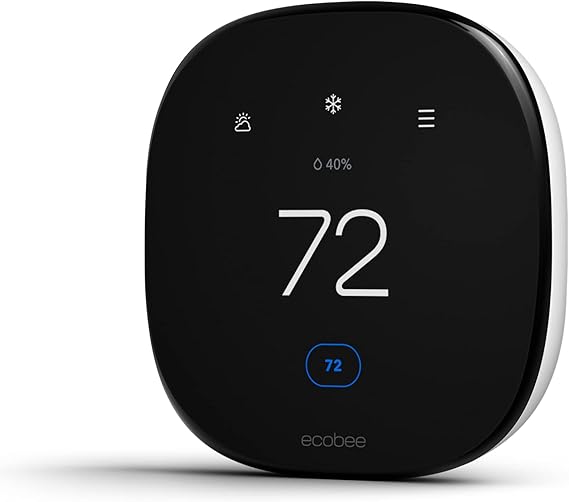
ecobee Smart Thermostat Enhanced
- Helpful for
- Automatically managing heating and cooling schedules when the thermostat is compatible with the home's HVAC system.
- Why homeowners may find it useful
- ENERGY STAR certified smart thermostats are independently certified based on field data to deliver energy savings, while also giving homeowners better control and information about HVAC use.
- Before choosing one
- Confirm compatibility with your specific heating and cooling system, including wiring and any C-wire requirement. Heat pumps and multi-stage or zoned systems need particular attention.
- What it won't do
- Fix a malfunctioning furnace, heat pump, duct system, or a poorly insulated home.
Sentinel Home may earn a commission from qualifying purchases at no additional cost to you. Products appear here because they may help with the problem described — not because of commission.
Does a high heating bill mean I need a new furnace?
No. A high bill is a symptom, and most of the causes above have nothing to do with equipment failure. Age is one factor among several.
- Repair history — how often, how recently, and how expensive
- Comfort — whether the home can actually hold temperature
- Efficiency relative to current equipment
- Overall system condition, not just the age on the label
- The cost of the repair actually being proposed
- A current professional diagnosis
- Expected remaining life
Replacing working equipment because of its age is one of the most expensive mistakes a homeowner can make. Get a diagnosis first, then decide.
Evaluate my system
Sentinel keeps a short list of HVAC options for exactly these situations — filters, thermostats, and comfort tools — with what each is for and when you probably don't need it.
Buying nothing is a valid outcome. Many of these steps cost nothing at all.
When a professional evaluation is appropriate
- System performance has materially changed from previous winters
- The equipment cycles abnormally — very short cycles, or never shutting off
- Rooms cannot maintain temperature no matter the setpoint
- Any gas smell, combustion concern, or carbon monoxide alarm activity — treat that as an emergency first
- Electrical problems, repeated breaker trips, or scorching
- Suspected duct leakage inside walls, ceilings, attics, or crawl spaces
- Repeated failures of the same component
- Anything you cannot inspect safely from outside the equipment
Sentinel's contractor experience is in early access. Until it opens, this routes to Sentinel's guidance and solutions for this system.
- Thermostat schedule and current setpoint confirmed
- Filter inspected and replaced with the correct specification
- Supply registers and return grilles clear
- Obvious door and window drafts addressed
- System runtime noted alongside outdoor temperature
- Utility usage trend compared year over year
- Maintenance history reviewed — and written down
- Equipment age and model recorded
- Room-to-room comfort differences noted
- Are You Ready? 10 Things to Do Before Fall & WinterThe seasonal walkthrough that gets a home ready before the bills arrive.
- Fall HVAC Maintenance ChecklistThe maintenance side of heating costs, step by step.
- How to Prevent Frozen PipesThe same cold-air pathways that raise bills put plumbing at risk.
- Furnace Won't Turn On?If the system stops responding entirely, start here.
Don't start from zero next winter
Save your heating equipment details, maintenance history, and repairs in Sentinel Home so next winter's comparison starts from facts instead of memory.
Sentinel Home is preparing for launch. Early access is free to join.
Frequently asked questions
Why did my heating bill suddenly increase?
The most common reasons are colder weather, more heating hours, a changed thermostat setpoint or schedule, a restricted filter, utility rate changes, and heat loss through leaks or insufficient insulation. Equipment problems are possible, but they are usually not the first thing to check.
Can a dirty furnace filter increase energy use?
Yes. A loaded filter restricts airflow, which makes the blower work harder and the system run longer to deliver the same heat. Replacing it with the correct size and specification for your equipment is the cheapest check on the list.
Does lowering the thermostat save money?
Reducing the setpoint while you sleep or are away lowers heating demand, though how much you save depends on your home, climate, and equipment. With a heat pump, deep setbacks can trigger electric backup heat during recovery, so gentler adjustments often cost less.
Should I buy a smart thermostat?
It can help when the real issue is scheduling and control. ENERGY STAR certified models are certified based on field data showing savings. Confirm compatibility with your system and wiring first, and understand that a thermostat cannot fix failing equipment, leaking ducts, or poor insulation.
Why does my furnace run constantly?
During very cold weather long cycles can be normal. Constant running that is new for the same outdoor conditions, or running while the indoor temperature falls, suggests reduced capacity, restricted airflow, significant heat loss, or a control problem — and warrants a professional evaluation.
Can poor insulation increase my heating bill?
Yes. Your equipment can only replace the heat the home loses. Under-insulated attics and unsealed air paths into unconditioned spaces increase that loss every cold day, regardless of how efficient the equipment is.
When should I consider replacing my furnace?
When a current professional diagnosis, repair history, repair cost, comfort, efficiency, and expected remaining life together point that way. Age by itself is not a reason to replace working equipment.
Sentinel guidance is written in-house and grounded in public-safety and government technical references.
Is your heating system working too hard?
Tell Sentinel what system you have, what you're noticing, and how your home's comfort has changed this winter. A higher bill with normal comfort is a different problem than a system that never stops running.
- Separates higher heating demand from a system that is struggling
- Uses your equipment, age, and maintenance history — not averages
- Points to the safe checks that actually apply to your setup
- Tells you plainly when a professional evaluation is the right next step
Ask Sentinel is preparing for launch. Joining early access is free, and Sentinel will start from your home's own details.
Make this part of your home's permanent record
Sentinel Home helps homeowners keep the details of each system in one place — equipment and model information, manuals, maintenance and repair history, replacement planning, and Home Health information — so the next question about your HVAC system is easier to answer than this one was.
Sentinel Home is in early access. Join the list to be notified when you can add your equipment to your home record.
Smart Capture
Record equipment details in seconds.
Asset Vault
Every system, manual, and warranty in one place.
Repair Guide
Understand the problem before you call anyone.
Maintenance Reminders
Well-timed prompts for seasonal work.
Replacement Forecast
See what is coming before it fails.
Home Health Score
One number for the state of your home.